
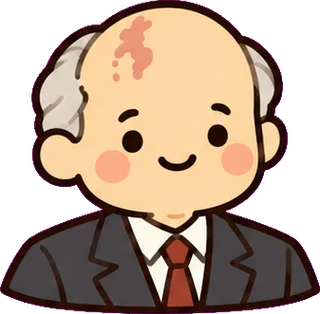
Soviet leader · 1931–2022
Mikhail Gorbachev Political views on the 12 axes
Last leader of the Soviet Union, whose glasnost and perestroika reforms opened up Soviet society and helped end the Cold War peacefully.
Read more on WikipediaAbout Mikhail Gorbachev
Mikhail Gorbachev (1931–2022) became general secretary of the Soviet Communist Party in 1985 and was the last leader of the Soviet Union. His policies of glasnost (openness) and perestroika (restructuring) eased censorship, allowed contested elections in 1989 and tried to reform the planned economy. He signed the INF Treaty with Ronald Reagan in 1987, withdrew troops from Afghanistan and did not intervene as Eastern Europe's communist governments fell in 1989. Supporters credit him with ending the Cold War without bloodshed; critics, many of them in Russia, blame him for the Soviet collapse of 1991 and the hardship that followed.
Where Mikhail Gorbachev stands
Our estimate from their writing and record. Axes they took no clear view on are left out.
Centrist
Proposed a new Union Treaty in 1991 that gave the republics more power, but opposed their full independence, so he sits near the middle.
Representative Democracy
Allowed the first contested Soviet elections in 1989 and ended the Communist Party's constitutional monopoly in 1990, though he never faced a popular vote himself.
Centrist
Glasnost loosened censorship and freed dissidents such as Andrei Sakharov in 1986, but troops still fired on protesters in Tbilisi, Baku and Vilnius, a slight lean toward Freedom.
Internationalism
His 'new thinking' sought cooperation with the West, arms-control treaties and the right of Eastern European countries to choose their own path.
Non-Aggressive
Signed the INF Treaty that scrapped a whole class of nuclear missiles and pulled Soviet troops out of Afghanistan by 1989, a lean toward Pacifist.
Moderate
Allowed joint ventures with foreign firms from 1987 and sought closer links with world markets, a modest step away from Soviet self-sufficiency toward Globalist.
Social Democratic
Wanted to renew socialism rather than abandon it, keeping public ownership and welfare while allowing small private cooperatives.
Balanced
The 1987 law on state enterprises and the 1988 law on cooperatives let in some market activity, but most of the economy stayed under the plan.
Agnostic
A Communist who called himself an atheist, yet he eased curbs on the churches and passed a law on freedom of conscience in 1990.
Moderate
Opened Soviet culture to banned books, films and open debate, a modest progressive lean, though his 1985 anti-alcohol campaign was socially strict.
Neutral
Called for faster scientific and technical progress to modernise Soviet industry, while the 1986 Chernobyl disaster forced new openness about nuclear safety.
Close in thought
 Lula da SilvaPresident of Brazil (2003–2010, 2023–)
 Pedro SánchezPrime Minister of Spain (2018–)
 John Maynard KeynesEconomist
 Fernando Henrique CardosoPresident of Brazil (1995–2002)
 Nelson MandelaPresident of South Africa
 Marcelo EbrardMayor of Mexico City (2006–2012), Foreign Secretary (2018–2023), Economy Secretary (2024–)
Ideologies closest to Mikhail Gorbachev
Compared on economy, power, diplomacy and culture, the four axes every ideology is defined on.
Questions, answered
What are Mikhail Gorbachev's political views on the 12 axes?
Last leader of the Soviet Union, whose glasnost and perestroika reforms opened up Soviet society and helped end the Cold War peacefully. Where Mikhail Gorbachev took a clear view. Structure: Centrist; Representation: Representative Democracy; Power: Centrist; Diplomacy: Internationalism; Military: Non-Aggressive; Trade: Moderate; Economy: Social Democratic; Control: Balanced; Religion: Agnostic; Culture: Moderate; Technology: Neutral.
Which ideology is closest to Mikhail Gorbachev?
Social Democracy (90% match), then Democratic Socialism (79% match). Compared on economy, power, diplomacy and culture.
How are Mikhail Gorbachev's positions estimated?
They are our editorial estimates from Mikhail Gorbachev's writing and record, from 0 to 100 on each axis. Axes they took no clear view on are left out.
How close are my views to Mikhail Gorbachev's?
Take the free 12 Axes test. Your result names the famous political figures closest to you, each with a match percentage.
How close are you to Mikhail Gorbachev?
Take the test and see which famous political figures think most like you.
Take the 12 Axes testWhat it measures and how to start: political test