
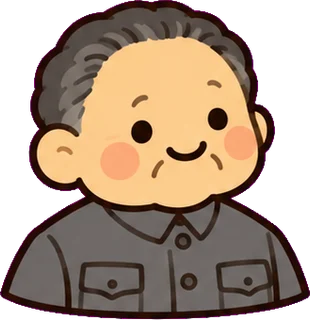
Chinese leader · 1904–1997
Deng Xiaoping Political views on the 12 axes
China's paramount leader from 1978, who opened the economy to markets and foreign investment while keeping the Communist Party's monopoly on power.
Read more on WikipediaAbout Deng Xiaoping
Deng Xiaoping (1904–1997) was a veteran of the Chinese revolution who was purged twice under Mao Zedong and emerged as China's paramount leader in 1978. His 'reform and opening up' let farm households work their own plots, created special economic zones such as Shenzhen and invited foreign investment, starting decades of rapid growth. He agreed the return of Hong Kong under 'one country, two systems' and backed the military crackdown on the Tiananmen Square protests in June 1989. Supporters credit him with lifting hundreds of millions out of poverty; critics point to 1989 and the party's refusal to share power.
Where Deng Xiaoping stands
Our estimate from their writing and record. Axes they took no clear view on are left out.
Unitary
Kept power centralised in the Communist Party in Beijing, though he gave provinces and special economic zones wide room to experiment.
Oligarchy
Set out the Four Cardinal Principles in 1979 to uphold party leadership and backed martial law against the 1989 protests, a strong stance toward Autocratic.
Authoritarian
The Democracy Wall movement was shut down in 1979, and in June 1989 the army cleared Tiananmen Square, killing many protesters, a strong pull toward Security.
Non-Interventionist
Opened China to the world and normalised relations with the United States in 1979, while guarding sovereignty over Hong Kong and Taiwan, so he lands near the middle.
Neutral
Launched a short border war against Vietnam in 1979 but cut the army by a million soldiers from 1985, a slight lean toward Militarist.
Free Trade
Opened special economic zones from 1980 with low taxes for foreign firms, pulling China toward world trade while the state still guarded key sectors.
Mixed Economic
Accepted that some people and regions would get rich first, trading Maoist equality for growth while the state kept ownership of land.
Balanced
Mixed plan and market through dual-track pricing and in 1992 backed a 'socialist market economy', which leaves him close to the middle.
Atheist
Led an officially atheist party; the 1982 constitution allowed only state-approved religious activity under close party control.
Conservative
Backed campaigns against 'spiritual pollution' in 1983 and 'bourgeois liberalisation', resisting Western cultural and political ideas, a lean toward Traditional.
Accelerationist
Made science and technology one of the Four Modernisations and called them a primary productive force, a strong lean toward Technology.
Close in thought





Ideologies closest to Deng Xiaoping
Compared on economy, power, diplomacy and culture, the four axes every ideology is defined on.
Questions, answered
What are Deng Xiaoping's political views on the 12 axes?
China's paramount leader from 1978, who opened the economy to markets and foreign investment while keeping the Communist Party's monopoly on power. Where Deng Xiaoping took a clear view. Structure: Unitary; Representation: Oligarchy; Power: Authoritarian; Diplomacy: Non-Interventionist; Military: Neutral; Trade: Free Trade; Economy: Mixed Economic; Control: Balanced; Religion: Atheist; Culture: Conservative; Technology: Accelerationist.
Which ideology is closest to Deng Xiaoping?
State Capitalism (90% match), then State Socialism (74% match). Compared on economy, power, diplomacy and culture.
How are Deng Xiaoping's positions estimated?
They are our editorial estimates from Deng Xiaoping's writing and record, from 0 to 100 on each axis. Axes they took no clear view on are left out.
How close are my views to Deng Xiaoping's?
Take the free 12 Axes test. Your result names the famous political figures closest to you, each with a match percentage.
How close are you to Deng Xiaoping?
Take the test and see which famous political figures think most like you.
Take the 12 Axes testWhat it measures and how to start: political test